About me

My photo
What started out as a pastime soon turned into a hobby that turned into a passion until it eventually became a necessity. Reading is a need so beautiful that I feel I must write about it every day.
Showing posts with label authors. Show all posts

Thursday, 12 September 2013

My terrible first line

I've had an extremely unproductive summer and I'll admit I did absolutely nothing worthwhile with my time but hey, I'm back home and here nobody expects me to put myself to any good use when I'm off for vacations.Since I wouldn't want to break my lazy spell by actually writing something, here's a list of the funniest first lines ever written that made my morning! 33 Of The Most Hilariously Terrible First Sentences In Literature History

I'm also down with a terrible flu but this made me feel SO much better! Its just Horrilarious! (a term used to define something which is equal parts horrifying and hilarious). Thank me later for giving you a new word. 

This list actually inspired me to write something myself.  Here's my attempt at a terrible first line: 
As she lay in a pool of crumpled tissues each one lined with snot, she looked up to her computer screen, the blank whiteness tingled her senses like nose hair right before a sneeze and in that sudden moment of epiphany, she knew. Her writing the greatest novel was as inevitable as a colony of bacteria on a beef steak at room temperature! 
How do you like me now!? 

P.S. Please ignore me. It's the meds talking. 

Thursday, 7 June 2012

Type away!

Ms. Procrastination over stayed her welcome, hence the blog was not updated for weeks but I've got to write now. Sometimes I feel like I'll explode or die of an emotional overload if I don't write. I know I must but sometimes, I just don't.

Anyway, I'm sure nobody who reads this blog wants to comb through my mental debris so I'll let you know something that may interest some of you. I'm getting myself a TYPEWRITER! Okay so I have wanted to get one for the longest time but wasn't able to find it in my city but now I finally know where I can get it from and next week I shall be typing away from the ultimate writing machine of the 1800s. 

I think my love for typewriters and other vintage items stems from a fascination with bygone eras, very much like Owen Wilson's longing to belong to the early 1900s in Midnight in Paris. Something about the fantasy-nostalgist theme of this movie made me wonder how incredible it would be to personally know these writers from almost a century ago who are now considered literary Gods. What insecurities had they faced in regards to their writing? Self doubts? The extent of their passion? I want to know everything about them!

I can't jump back in time but I can own something that was used by them, and so, using a typewriter is my way of getting a little closer to the writers I've admired all my life.
Source: molsrock.tumblr.com

Saturday, 7 April 2012

Nastiest literary insults of all time

I think most authors are an insecure and envious lot. Hell breaks loose when a writer decides to spew his/her hatred publicly. It makes for a highly amusing read too. No wonder these insults are so eloquent and hard-hitting, after all they have been made by some very good writers who just find their fellows really bad. Ladies and gentlemen, I hereby present to you a stunning mix of wit, jealousy and sarcasm.
Note: Regarding some comments as plain nasty would be an understatement. 
Let the vicious war of words begin!


Oscar Wilde on Alexander Pope
“There are two ways of disliking poetry; one way is to dislike it, the other is to read Pope.”

Lord Byron on John Keats
 “Here are Johnny Keats’ piss-a-bed poetry, and three novels by God knows whom… No more Keats, I entreat: flay him alive; if some of you don’t I must skin him myself: there is no bearing the drivelling idiotism of the Mankin.”

Mark Twain on Jane Austen
Every time I read ‘Pride and Prejudice,’ I want to dig her up and hit her over the skull with her own shin-bone.” Ouch!

Vladimir Nabokov on Ernest Hemingway 
 “As to Hemingway, I read him for the first time in the early ‘forties, something about bells, balls and bulls, and loathed it.”

Homer J. Simpson on Walt Whitman's book
'Leaves of grass' my ass!

Harold Bloom on J.K. Rowling
“How to read ‘Harry Potter and the Sorcerer’s Stone’? Why, very quickly, to begin with, and perhaps also to make an end. Why read it? Presumably, if you cannot be persuaded to read anything better, Rowling will have to do.” Sorry Potter fans

Gertrude Stein on Ezra Pound
“A village explainer. Excellent if you were a village, but if you were not, not.”

 H. G. Wells on George Bernard Shaw
“An idiot child screaming in a hospital.”

Charles Baudelaire on Voltaire (1864)
“I grow bored in France — and the main reason is that everybody here resembles Voltaire…the king of nincompoops, the prince of the superficial, the anti-artist, the spokesman of janitresses, the Father Gigone of the editors of Siecle.”

William Faulkner on Ernest Hemingway
“He has never been known to use a word that might send a reader to the dictionary.”

Ernest Hemingway on William Faulkner
“Poor Faulkner. Does he really think big emotions come from big words?”

Gore Vidal on Truman Capote
“He’s a full-fledged housewife from Kansas with all the prejudices.”  

Truman Capote on Jack Kerouac
“That’s not writing, that’s typing.”

W. H. Auden on Robert Browning
“I don’t think Robert Browning was very good in bed. His wife probably didn’t care for him very much. He snored and had fantasies about twelve-year-old girls.”

Evelyn Waugh on Marcel Proust (1948)
“I am reading Proust for the first time. Very poor stuff. I think he was mentally defective.”

Virginia Woolf on James Joyce
“[Ulysses is] the work of a queasy undergraduate scratching his pimples.”

William Faulkner on Mark Twain 
“A hack writer who would not have been considered fourth rate in Europe, who tricked out a few of the old proven sure fire literary skeletons with sufficient local color to intrigue the superficial and the lazy.”

D.H. Lawrence on James Joyce (1928)
“My God, what a clumsy olla putrida James Joyce is! Nothing but old fags and cabbage stumps of quotations from the Bible and the rest stewed in the juice of deliberate, journalistic dirty-mindedness.”

James Dickey on Robert Frost:
“If it were thought that anything I wrote was influenced by Robert Frost,
I would take that particular work of mine, shred it, and flush it down
the toilet, hoping not to clog the pipes...'' Seriously Dickey? lol

H.G. Wells on Henry James:
“A hippopotamus trying to pick up a pea  that has got into a corner of its cage..”

Lawrence Durrell on Henry James
 “If I were asked to choose between reading Henry James and having my head pressed between two stones, I’d choose the latter.” Sorry Azzaam, that must've hurt. 

 Mark Twain on Henry James:
“Once you put one of his books down, you simply can’t pick it up again.”

Mark Twain on Edgar Allan Poe.
“To me, his prose is unreadable– like Jane Austen’s”

Gore Vidal after being punched by Norman Mailer 
 “I see Norman, words have failed you again!”

Louis-Ferdinand Céline on D.H.Lawrence’s “Lady Chatterley’s Lover”:
“600 hundred pages for a gamekeeper’s dick, it’s way too long.”

Vidal on Truman Capote’s death
 “A good Career move.”

Mark Twain on Jane Austen:
Just the omission of Jane Austen’s books alone would make a fairly good library out of a library that hadn’t a book in it

Dorothy Parker’s on Benito Mussolini’s -The Cardinal’s Mistress
“This is not a novel to be tossed aside lightly. It should be thrown with great force.” HAHA

Flannery O’Connor on Harper Lee
 “I think for a child’s book it does all right. It’s interesting that all the folks that are buying it don’t know they’re reading a child’s book.”

John Updike on the name of a character in one of Rushdie's novels who has the same name as a German actor: Why, oh why, did Salman Rushdie, in his new novel ... call one of his major characters Maxmilian Ophuls
Salman Rushdie: A name is just a name. Why oh why ... Well, why not? Somewhere in Las Vegas there's probably a male prostitute called John Updike.

Dorothy Parker on Clare Booth Luce
Clare Booth Luce, opening a door for Dorthy Parker: Age before beauty.
Dorothy Parker: Pearls before swine. OH GOD!

Ben Jonson on William Shakespeare
“I remember the players have often mentioned it as an honor to Shakespeare, that in his writing, whatsoever he penned, he never blotted out a line. My answer hath been, ‘Would he had blotted a thousand,’ Don't speak ill of the bard!

Salman Rushdie on John le Carré 
 “an illiterate pompous ass”.

James Dickey on Steinbeck
I can't read ten pages of Steinbeck without throwing up.

Arnold Bennett on Charles Dickens
About a year ago, from idle curiosity, I picked up 'The Old Curiosity Shop', and of all the rotten vulgar un-literary writing...! Worse than George Eliot.

Samuel Johnson on John Milton's Paradise Lost
'Paradise Lost' is one of the books which the reader admires and lays down, and forgets to take up again.

Anatole France on Emile Zola
His work is evil, and he is one of those unhappy beings of whom one can say that it would be better had he never been born.

Norman Mailer on Tom Wolfe’s 
“Reading the work can even be said to resemble the act of making love to a 300lb woman. Once she gets on top, it’s over. Fall in love, or be asphyxiated.”

I'm just as surprised as you are...
Friday, 9 March 2012

Stereotyping People by Their Favorite Author

Yes I know stereotyping is frowned upon but I found this really interesting post on StumbleUpon and I couldn't help but post it here. I've made a few alterations to the original list which can be found here.

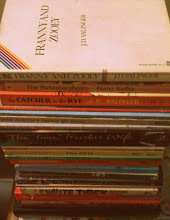
  • J.D. Salinger
  • Kids who don’t fit in.
  • Stephenie Meyer
  • People within the age group of 12-18 who lost faith in human love too early and now put their trust in shiny vampires
  • J.K. Rowling
  • People who detest their school.
  • Jodi Picoult
  • Your mom when she’s at her time of the month.
  • Leo Tolstoy
  • Guys I want to date.
  • Fyodor Dostoevsky
  • Guys I want to sleep with.
  • David Foster Wallace
  • Confirmed 90’s literati.
  • Jane Austen (or Bronte Sisters)
  • Girls who made out with other girls in college when they were going through a “phase”.
  • Ralph Waldo Emerson
  • People who can start a fire.
  • Nathaniel Hawthorne
  • People who used to sleep so heavy that they would pee their pants.
  • Charles Dickens
  • Ninth graders who think they’re going to be authors someday but end up in marketing.
  • Mark Twain
  • Proud bastards
  • Anne Rice
  • People who appreciate real vampires
  • Edgar Allan Poe
  • Men who live in their mother’s basements.
  • John Grisham
  • Doctors who went to medical schools in the Dominican Republic.
  • Dan Brown
  • People who used to get lost in supermarkets when they were kids.
  • Nicholas Sparks
  • Women who are usually constipated.
  • Sylvia Plath
  • Suicidal girls who keep journals
  • George Orwell
  • Conspiracy theorists
  • Harper Lee
  • People who have read only one book in their life and it was To Kill A Mockingbird (and it was their assigned reading in the ninth grade).
  • Ernest Hemingway
  • Tough army men with a soft spot for stirring prose.
  • F. Scott Fitzgerald
  • People who get adjustable-rate mortgages and party hard.
  • Vladimir Nabokov
  • Men who use words like ‘dubious’ and ‘tenacity’.
  • Lewis Carroll
  • People who move to Thailand after high school for the drug scene.
  • Gabriel Garcia Marquez
  • Men who can’t lie but will instead be silent if they know you don’t want to hear the truth.
  • Stieg Larsson
  • Girls who are too frightened to go skydiving.
  • Virginia Woolf
  • Girls who like talking about death with their suicidal friends.
  • Salman Rushdie
  • People who google images of Padma Lakshmi late at night. (True story!)
  • James Joyce
  • People who do not like John Cusack movies.
  • Oscar Wilde
  • People who can’t resist anything. See also: people who claim they’re going to change but never do!
  • Franz Kafka
  • People with daddy issues.
Any other author you want to see in the list?

Thursday, 8 March 2012

New titles in my collection this week!

Looks like this is my lucky week! Not only did I buy three of the books I've been eying for some time now but a dear friend sent me some valuable novels that are sure to be added to my library.
Here are the new additions to my collection: 

Currently reading
1) Our lady of Alice Bhatti by Mohammed Hanif

Last year after reading the darkly comedic 'A case of exploding Mangoes', I had fallen in love with it's brilliant author- Mohammed Hanif. This is his second book. So far in, I can't shake the feeling that Hanif should have stuck to his former writing style that won him worldwide acclaim. Satire is definitely his forte. Bhatti, nevertheless still has me gripped. 
Best line: ''Because love is a runaway charya!''


Second in line
2) A House for Mr. Biswas by V.S. Naipaul


Hailed as one of the twentieth century's finest novels, I think this is going to be Naipaul's best book I'll read.


To-read
3) Of Love and Other Demons by Gabriel García Márquez


My love affair with Marquez seems to be a lasting one. This would be the third book I'll read by this literary giant. 


4)  Like the Flowing River by Paulo Coelho


'A breathtaking collection of reflections from one of the world's best loved storytellers, Paulo Coelho.' Goodreads.com


I've had a love and hate relationship with Coelho. While I treasured The Alchemist, I swore off all his books after reading Veronica decides to die. However, it's been sometime since I've read any of his other novels. Also, his thought provoking blog posts have finally prompted me to go back to him and give this one a shot.

 5)  The Alchemist by Paulo Coelho

 “And, when you want something, all the universe conspires in helping you to achieve it.”
Of course I've already read this one and I don't think it needs any description. ;)


How many of these books have you read? No spoilers please!

Thursday, 1 September 2011

Suicidal vein in creative geniuses.

It may sound disturbing but history bears witness to the demise of some of the greatest in the literary world who became the masters of their final destiny. Suicidal obsession, severe depression and feelings of seclusion are all emotions that over shadowed the lives of these writers below, prompting them to eventually take their own lives.


John Kennedy Toole (1917 –1963)
Died aged 31

"It will all end very badly, Gus"
— John Kennedy Toole (A Confederacy of Dunces)


John Kennedy Toole  was an American novelist, best known for his novel 'A Confederacy of Dunces' . Toole’s novels remained unpublished during his lifetime.  In 1981 Toole was posthumously awarded the Pulitzer Prize for Fiction 11 years after his suicide.
How he did it?
After suffering from paranoia and depression over critcism of his unpublished work, Toole committed suicide on March 26, 1969, after disappearing from New Orleans, by putting one end of a garden hose into the exhaust pipe of his car and the other into the window of the car in which he was sitting. The suicide note he left was destroyed by his mother.


Sylvia Plath (1932 –1963) 


 Died aged 30

"Death must be so beautiful. To lie in the soft brown earth, with the grasses waving above one's head, and listen to silence. To have no yesterday, and no to-morrow. To forget time, to forgive life, to be at peace."
— Sylvia Plath (The Bell Jar)


Sylvia Plath was an American poet, novelist and short story writer. Her best-known works are replete with themes of alienation, death, and self-destruction. Plath published her first poem at age eight. She entered and won many literary contests and entered Smith College on a scholarship in 1951. She was a cowinner of the Mademoiselle magazine fiction contest in 1952. Despite her remarkable artistic, academic, and social success at Smith, Plath suffered from severe depression and underwent a period of psychiatric hospitalization.

In 1982, she became the first poet to win a Pulitzer Prize posthumously, for The Collected Poems. She also wrote The Bell Jar, a semi-autobiographical novel published shortly before her death.

Plath's fellow confessional poet and friend Anne Sexton commented: "Sylvia and I would talk at length about our first suicide, in detail and in depth—between the free potato chips. Suicide is, after all, the opposite of the poem. Sylvia and I often talked opposites. We talked death with burned-up intensity, both of us drawn to it like moths to an electric lightbulb, sucking on it. She told the story of her first suicide in sweet and loving detail, and her description in The Bell Jar is just that same story."
(Anne Sexton committed suicide in 1974)

"The Sylvia Plath effect" is a term coined by psychologist James C. Kaufman in 2001 to refer to the phenomenon that poets are more susceptible to mental illness than other creative writers. 
How she did it?
In 1963, five months after seperation from husband, Plath placed her head in the oven, with the gas turned on. Her nurse found her dead of carbon monoxide poisoning in the kitchen, with her head in the oven, having sealed the rooms between herself and her two sleeping children with wet towels and cloths.

Her second child, Nicholas Hughes hanged himself at the age of 47.


ANNE SEXTON  (1928-1974)
Died aged 45 

"Any writer, any artist, I'm sure is obsessed with death, a prerequisite for life."
- Anne Sexton


Anne Sexton was a prolofic American writer. Her poetry dealth with themes selcusion, suicide and depression. She won the Pulitzer Prize in poetry for Live or Die in 1967.

Sexton suffered from severe mental illness for much of her life. She asserted that speaking of death stimulated her and made her real, but she admitted that such a fascination with death sounded strange and sick, and that many people would never understand it.  Another event which reignited a longing for death in Anne Sexton's case was the news of Sylvia Plath's suicide. This event led to Anne's poem "Wanting to Die"
How she did it?
On October 4, 1974, Sexton had lunch with poet Maxine Kumin to revise galleys for Sexton's manuscript of The Awful Rowing Toward God, scheduled for publication next year. On returning home she put on her mother's old fur coat, removed all her rings, poured herself a glass of vodka, locked herself in her garage, and started the engine of her car, committing suicide by carbon monoxide poisoning.

Her eldest daughter, Linda Gray Sexton attempted suicide thrice but survived.


Virginia Woolf (1882 – 1941)
Died Aged 51
"To look life in the face, always, to look life in the face, and to know it for what it is...at last, to love it for what it is, and then to put it away."
— Virginia Woolf

Woolf was an English author, essayist, publisher, and writer of short stories, regarded as one of the foremost modernist literary figures of the twentieth century.
Born in London and raised there by eminent parents, Woolf had to deal with depression throughout her life.
However, Woolf’s mental illness did not prevent her from becoming  successful. She enjoyed a long and fulfilling marriage with her husband, Her most famous works include the novels Mrs. Dalloway (1925), To the Lighthouse (1927), and Orlando (1928).
How she did it?
On March 28, she slipped on an overcoat weighed down with rocks and drowned herself in the River Ouse. Her body wasn’t found for three weeks.
Her suicide note:
“I feel certain that I am going mad again… and I can’t recover this time.I begin to hear voices, and I can't concentrate. So I am doing what seems the best thing to do...” – so read the suicide note she left for Leonard, her husband of almost thirty years.

And perhaps the most famous of them all:
 Ernest Hemingway (1899 – 1961)
"Every man's life ends the same way. It is only the details of how he lived and how he died that distinguish one man from another."

Hemingway is best known for writing several novels which are now considered classics of American literature, such as For Whom The Bell Tolls (1940) and The Old Man And The Sea (1952). His contributions to literature won him both the Pulitzer Prize (1953) and the Nobel Prize (1954).
Hemingway’s love of the bottle developed into alcoholism later in life, leading to high blood pressure and liver problems.
How he did it?
Hemingway loaded both barrels of his favorite twelve-gauge shotgun, put the weapon in his mouth, and blew his brains out the back of his head.

Four other members of Hemingway’s immediate family also committed suicide – his father, two of his siblings, and his granddaughter – leading some to the conclusion that a hereditary disease was at work behind the scenes.

It makes me wonder, are most creative masterminds susceptible to suicide? This maybe due to the very nature of work displayed by writers in particular. Writing is a sensitive art that requires one to not only explore the inner workings of their mind but also put them on paper for the world to scrutinize. Sometimes, failure to do so (and as is often the case) may overwhelm the writer with the weight of his own thoughts and ideas leading to the ultimate escape.


Related Posts Plugin for WordPress, Blogger...